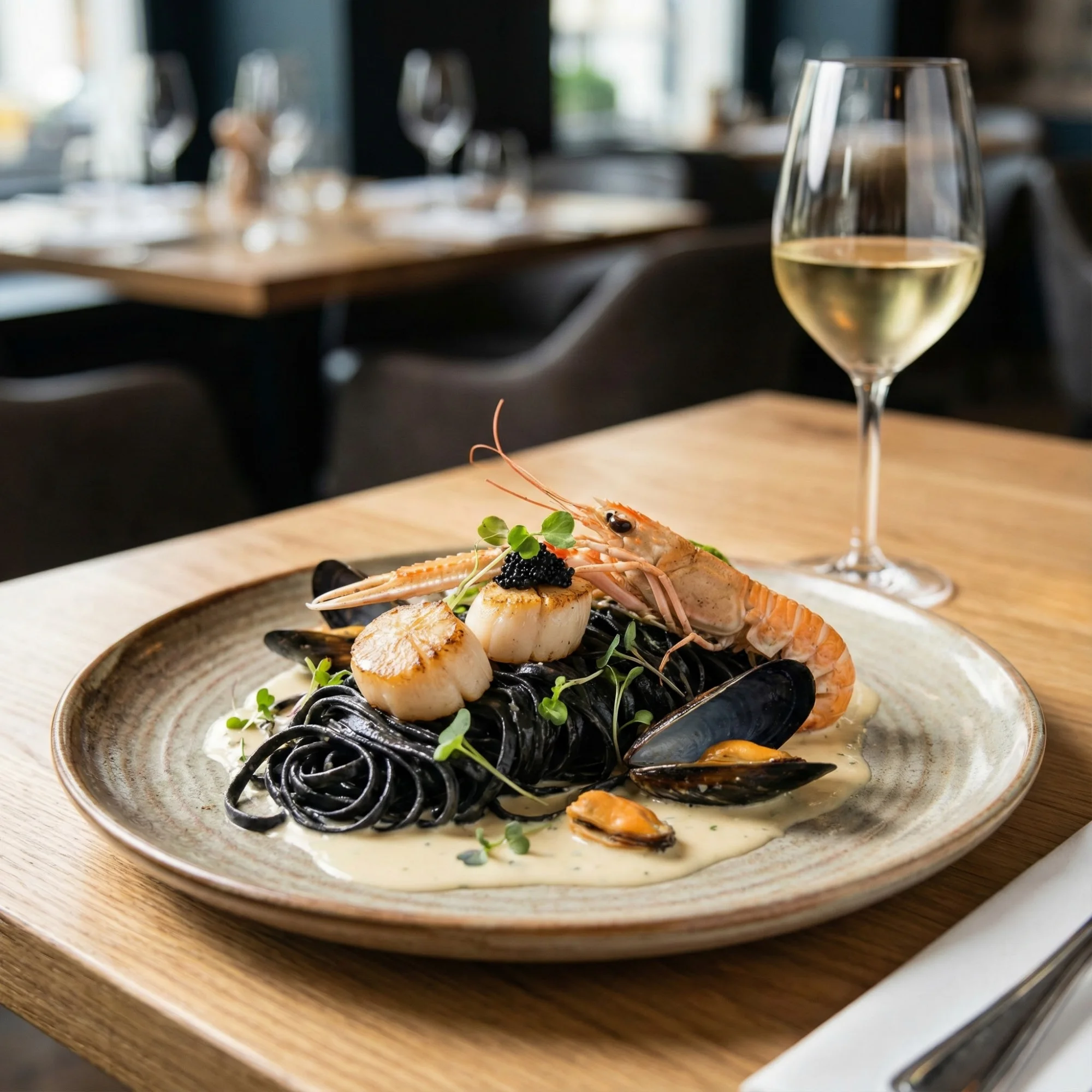
Squid ink pasta is one of the most visually striking dishes in Italian cuisine. The dramatic black pasta provides the perfect canvas for pristine seafood and creates a sophisticated dining experience that's surprisingly achievable at home.
The Magic of Squid Ink
Squid ink pasta isn't just about aesthetics—it adds a subtle briny flavor that enhances the seafood. You can buy it fresh from Italian specialty shops or make it yourself by incorporating squid ink into your pasta dough. The ink contains melanin, which gives it that intense black color and adds a delicate ocean flavor without being fishy.
Ingredients
- 400g fresh squid ink pasta (or linguine with squid ink)
- 6 large scallops, cleaned and dried thoroughly
- 4-6 langoustines or large prawns, shells on
- 200ml heavy cream (35% fat)
- 100ml dry white wine (Pinot Grigio or Sauvignon Blanc)
- 3 cloves garlic, finely minced
- 2 shallots, finely diced
- Fresh microgreens for garnish
- Caviar or salmon roe for garnish (1-2 tbsp)
- Extra virgin olive oil
- 50g cold butter, cubed
- Fresh lemon juice
- Sea salt and white pepper
- Fresh parsley, chopped
Preparing the Scallops
The key to perfectly seared scallops is dryness. Remove the small side muscle from each scallop. Pat them completely dry with paper towels—any moisture will prevent proper searing. Season only the sides that will touch the pan, about 5 minutes before cooking. Room temperature scallops sear better than cold ones.
Method
Step 1 - Sear the Scallops: Heat 2 tablespoons of olive oil in a heavy cast-iron or stainless steel pan over high heat until it begins to shimmer and smoke slightly. Place scallops in the pan, leaving space between each one. Don't move them! Let them sear for 2 minutes undisturbed until a golden crust forms. Flip and sear for another 1-2 minutes. Remove and keep warm.
Step 2 - Cook the Langoustines: In the same pan, add a bit more oil if needed. Sear langoustines for 2-3 minutes per side until shells turn bright red and meat is opaque. Remove and set aside with scallops.
Step 3 - Make the Sauce: Reduce heat to medium. Add diced shallots and minced garlic to the pan, sautéing for 1 minute until fragrant. Deglaze with white wine, scraping up all the flavorful browned bits from the bottom. Let wine reduce by half. Add heavy cream and bring to a gentle simmer. Let it reduce slightly until it coats the back of a spoon, about 3-4 minutes. Season with salt, white pepper, and a squeeze of lemon juice. Remove from heat and whisk in cold butter cubes one at a time until sauce is silky and glossy.
Step 4 - Cook the Pasta: Meanwhile, cook squid ink pasta in heavily salted boiling water until al dente (usually 2-3 minutes for fresh pasta, follow package directions for dried). Reserve 1 cup of pasta water before draining.
Step 5 - Combine: Add the drained pasta to the cream sauce, tossing to coat. If sauce is too thick, add a splash of reserved pasta water. Adjust seasoning.
Plating
Twirl pasta into nests on warmed plates using tongs or a carving fork. Arrange scallops and langoustines artfully on top. Drizzle with any remaining sauce. Garnish with fresh microgreens and a small spoonful of caviar on each scallop. Add a final drizzle of excellent olive oil and cracked black pepper. The visual contrast of glossy black pasta, golden scallops, and vibrant garnishes is stunning.
Wine Pairing
Serve with a crisp, mineral-driven white wine like Vermentino, Muscadet, or Chablis. The wine's acidity cuts through the richness of the cream while complementing the seafood.
Chef's Tips
- Never overcrowd the pan when searing scallops—they'll steam instead of sear
- Fresh langoustines are ideal, but large prawns work beautifully too
- The pasta water is your friend—its starch helps the sauce cling to the pasta
- Squid ink can stain, so wear an apron and work carefully
- For extra luxury, add a few drops of truffle oil before serving