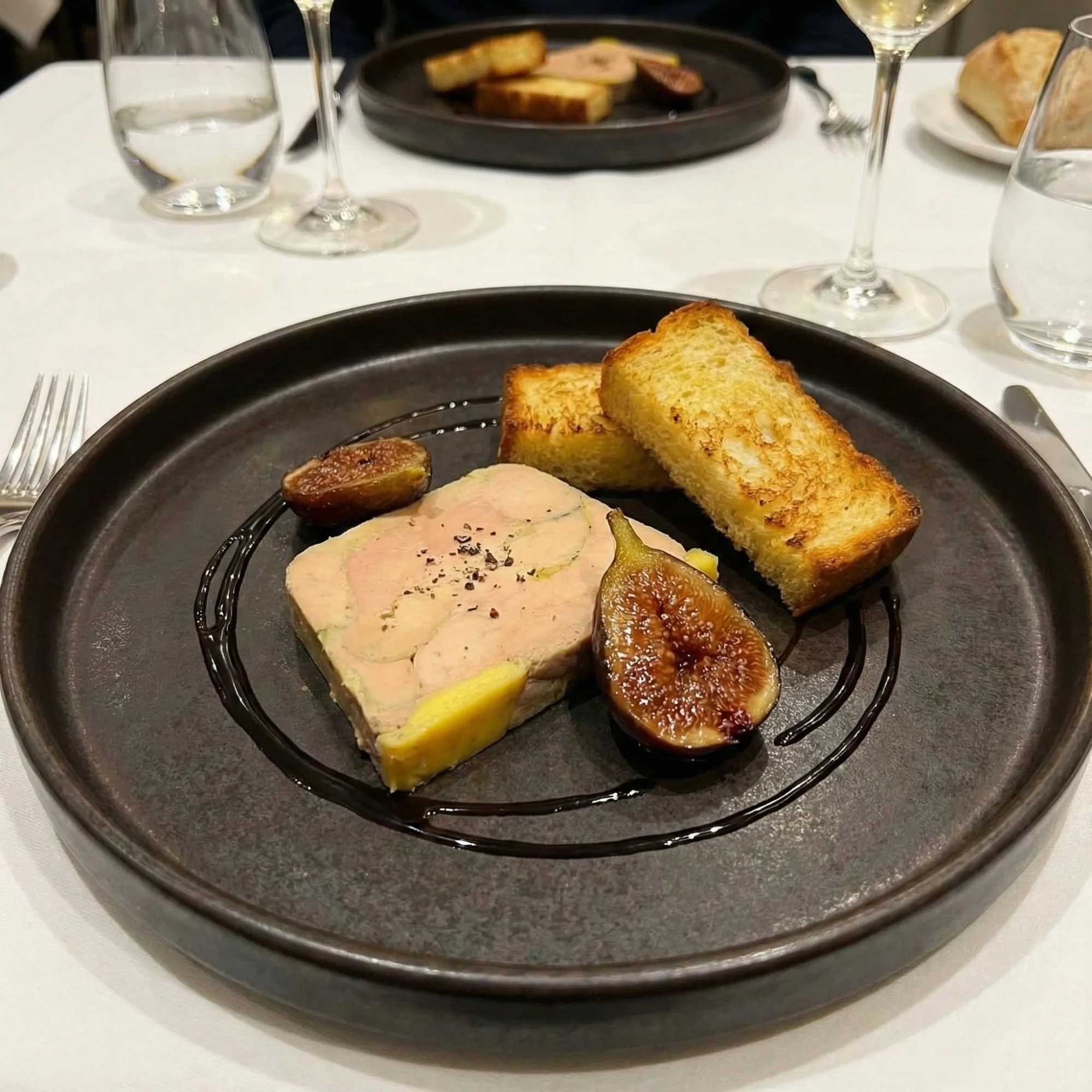
Foie gras is the pinnacle of French gastronomy—rich, buttery, and utterly luxurious. When paired with sweet caramelized figs and toasted brioche, it creates a harmony of flavors and textures that's simply unforgettable. This dish showcases how contrasting elements can create perfect balance.
Understanding Foie Gras
Foie gras, literally "fat liver" in French, is the enlarged liver of a duck or goose. Grade A foie gras should be firm to the touch, uniform in color (pale ivory to golden), and free of blemishes or blood spots. It should feel cold and dense. Let it come to room temperature 20-30 minutes before cooking—this ensures even searing and prevents it from falling apart in the pan.
Ingredients
- 200g fresh Grade A foie gras, sliced 2cm thick (2 portions)
- 4 fresh ripe figs (Black Mission or Brown Turkey)
- 4 slices of brioche, 1.5cm thick
- 2 tbsp honey (acacia or chestnut)
- 1 tbsp unsalted butter
- 2 tbsp aged balsamic reduction (or make your own)
- Fleur de sel (French sea salt)
- Freshly cracked black pepper
- Fresh microgreens or baby arugula
- Optional: tiny edible flowers for garnish
Preparing the Foie Gras
Using a sharp knife dipped in hot water (wipe between cuts), slice the foie gras into portions about 2cm thick. Score each slice in a crosshatch pattern on one side, cutting about 3mm deep—this helps render fat and creates beautiful presentation. Season both sides generously with fleur de sel and freshly cracked pepper about 5 minutes before cooking.
The Perfect Sear
Step 1: Heat a dry heavy-bottomed pan (cast iron or stainless steel) over high heat until very hot—you should feel heat radiating from it. No oil needed; foie gras has enough fat.
Step 2: Place foie gras scored-side down in the screaming hot pan. You should hear an immediate sizzle. Sear for exactly 45-60 seconds without moving it. The scored side should develop a deep golden-brown crust.
Step 3: Flip carefully using a fish spatula. Sear the other side for another 30-45 seconds. The foie gras should remain creamy pink inside while the exterior is beautifully caramelized. It will render a lot of fat—reserve this precious liquid for cooking potatoes or vegetables later.
Step 4: Remove immediately and place on a warm plate. The carryover cooking will continue for a moment.
Caramelizing the Figs
Cut figs in half lengthwise. In a separate pan over medium-high heat, melt butter. Place figs cut-side down. Cook for 2-3 minutes until they begin to caramelize. Drizzle with honey and continue cooking for another 1-2 minutes, letting the honey bubble and reduce. The figs should be soft, golden, and glossy. A light sprinkle of black pepper on the figs adds complexity.
Toasting the Brioche
Brush brioche slices lightly with melted butter. Toast in a dry pan or under the broiler until golden brown on both sides, about 1-2 minutes per side. The exterior should be crispy while the interior remains soft and pillowy.
Plating for Elegance
Place a warm brioche slice in the center of each plate. Top with the seared foie gras. Arrange caramelized fig halves around it. Drizzle aged balsamic reduction artistically in drops and swooshes around the plate. Garnish with a small handful of fresh microgreens or baby arugula on top. If using, add a few edible flowers for color. Finish with a final pinch of fleur de sel.
Wine Pairing
The classic pairing is Sauternes—the sweet, honeyed Bordeaux wine perfectly complements foie gras. Alternatives include late-harvest Riesling, Gewürztraminer, or even a chilled tawny port.
Chef's Notes
- Timing is everything—foie gras overcooks in seconds
- A very hot pan is essential for proper searing
- Save the rendered fat—it's culinary gold
- Fresh figs are crucial; dried won't give the same result
- Serve immediately while the foie gras is warm and the brioche is crispy
- For balsamic reduction: simmer balsamic vinegar until thick and syrupy
Historical Note
Foie gras has been prized since ancient Egyptian times. The modern preparation technique was perfected in France in the 18th century. It remains one of the most celebrated luxury ingredients in haute cuisine, especially in regions like Périgord and Alsace.